Global fitness demand is expanding, but selecting an OEM partner requires more than comparing catalog prices. The Global Wellness Institute’s 2024 Global Wellness Economy Monitor valued the physical activity sector at approximately US$1.06 trillion in 2023. It projects continued growth through 2028. That momentum creates opportunities for importers, gym chains, hospitality groups, and online fitness brands.
Yet growth does not guarantee reliable supply. The 2024 EuropeActive and Deloitte European Health & Fitness Market Report recorded about 67.6 million fitness club members across Europe in 2023. These users expect quieter treadmills, stronger frames, intuitive displays, and dependable after-sales support. A manufacturer’s real capability appears in details. Think welded joints, motor cooling, packaging corners, spare-part response times, and software stability after repeated use.
This guide evaluates seven leading OEM Fitness Equipment Manufacturing companies for global buyers. It considers production capacity, product customization, quality systems, export experience, certifications, and service performance. ISO 9001 certification can support process consistency, but it cannot replace factory audits or product testing. Buyers should also verify applicable standards, electrical requirements, labeling rules, and warranty obligations in each destination market.
The data has limits. Industry reports often combine commercial fitness, home equipment, and broader wellness categories. Rankings can also change as factories expand or customer service declines. That is worth remembering. A lower quotation may hide tooling fees, minimum order quantities, weak documentation, or costly replacement parts. The strongest OEM choice balances engineering evidence, transparent communication, compliant production, and long-term commercial fit.
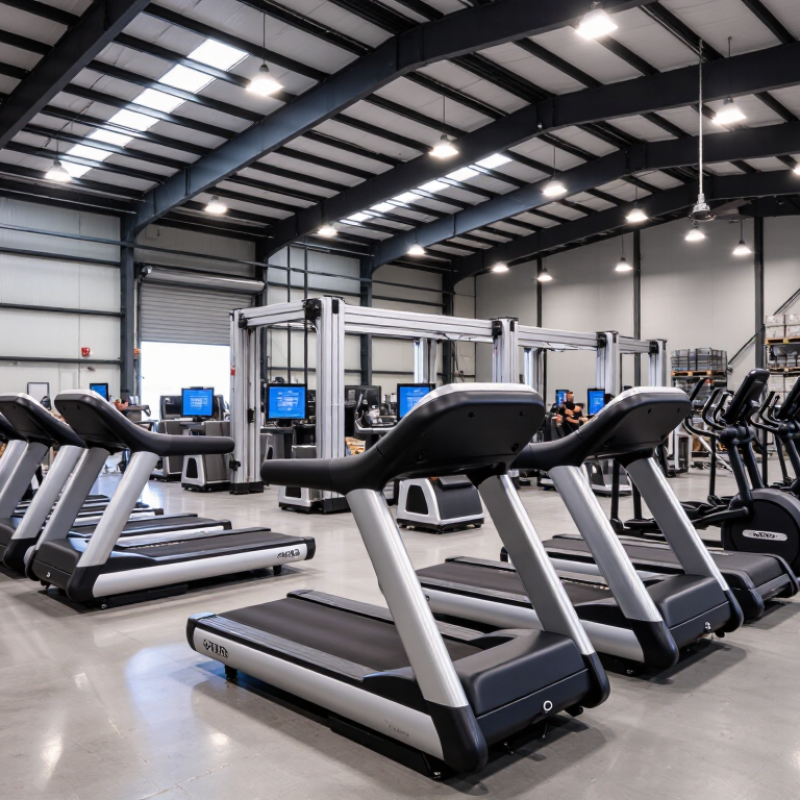
OEM fitness equipment manufacturing means building products for another company’s specifications, branding, and market requirements. It involves design review, engineering samples, tooling, production, testing, packaging, and after-sales support. The process is more than placing a logo on a treadmill.
The Global Wellness Institute reported that the wellness economy reached 6.3 trillion dollars in 2023. Its forecast suggests growth toward 9 trillion dollars by 2028. This expansion increases demand for reliable strength, cardio, and connected training equipment. An experienced OEM partner should convert a product brief into measurable details. These include frame thickness, motor duty cycle, noise limits, software functions, and weight capacity. Factory audits and sample testing can expose weak welds or unstable control panels. A polished sample may still hide production risks. That part deserves skepticism.
Tips: Define the user before defining the machine. Set acceptance standards early. Request a pilot run before mass production. Check electrical, material, and labeling requirements in each destination market. Independent testing can strengthen reliability claims, although it adds time and cost. Do not ignore spare parts. A missing belt or sensor can stop a customer’s workout for weeks. Fitness equipment also creates data concerns when apps track users. Clear permissions and secure software updates should be included in the OEM specification. Mistakes happen. Good documentation makes them easier to find and correct.
For global buyers, evaluating an OEM fitness equipment manufacturer starts with evidence, not polished catalogs. The Global Wellness Institute valued the wellness economy at $6.3 trillion in 2023. That growth raises expectations for dependable equipment and consistent supply. ACSM’s Worldwide Survey of Fitness Trends 2024 ranked wearable technology among leading trends. This highlights the importance of connected features, software control, and data-security responsibilities. Vague answers are warning signs.
Request factory audit records, production samples, calibration certificates, and corrective-action reports. Check for ISO 9001 quality systems and relevant standards, including ISO 20957 or ASTM specifications. Ask for measurable results: first-pass yield, warranty-return rate, delivery performance, and corrective-action time.
Visit the production line if possible. Watch a treadmill frame being welded, assembled, and load-tested.
A spreadsheet cannot reveal loose cable routing or rushed inspections. The cheapest quote can still be expensive.
Strong OEM partners also protect supply continuity. Review component suppliers, spare-part availability, tooling ownership, minimum order quantities, and change-control procedures. Require traceable serial numbers and documented pre-shipment inspections. Sustainability needs evidence, not slogans; request material declarations, packaging data, and energy records.
I would score suppliers using weighted criteria instead of price alone. My own mistake was trusting a sample that received extra attention. Production reality may differ. Use a pilot order, independent inspection, and clear acceptance criteria before scaling.
Global buyers need more than attractive product images. They need factories with repeatable engineering, documented testing, and dependable communication. The strongest OEM partners usually serve different equipment needs.
The first manufacturer type focuses on commercial treadmills and bikes. Buyers should inspect motor ratings, belt alignment, noise levels, and service access.
The second specializes in selectorized strength machines, where weld quality and cable routing affect daily safety.
The third develops connected equipment with consoles, sensors, and software integration. Request a working sample, not only a digital demonstration.
The fourth manufacturer produces compact home equipment for apartments and smaller studios. Folding hinges, wheel locks, and packaging protection deserve close attention. The fifth supports rehabilitation and low-impact training, requiring careful adjustment ranges and clear user instructions. The sixth builds outdoor fitness equipment with corrosion-resistant finishes and reinforced frames. The seventh supplies racks, benches, and modular accessories for flexible gym layouts.
Factory audits should review quality records, material sources, loading tests, and replacement-part systems. Ask how defects are handled after shipment. That answer matters.
No factory is perfect. A supplier may offer excellent welding but weak documentation. Another may provide polished software but slow spare-part support. I would compare samples under real training conditions, record small defects, and discuss corrections before signing production terms. A practical inspection checklist often reveals more than a confident sales presentation.
Comparing OEM fitness equipment manufacturers requires more than checking catalog prices. A reliable supplier should explain its factory capacity, production process, and quality controls clearly. Ask to inspect welding areas, powder-coating lines, assembly stations, and finished-product storage. Photos help, but live video or an independent audit offers stronger evidence.
Product testing deserves close attention. Request load-test records for frames, handles, cables, benches, and moving joints. Confirm the testing method, sample size, and corrective actions. A supplier that only says “passed inspection” is not giving enough detail. Check whether materials match the approved sample, especially steel thickness, upholstery density, grip texture, and coating finish. Small differences become expensive after thousands of units.
Compare minimum order quantities, tooling charges, sample fees, lead times, packaging standards, and spare-part policies. Ask for a written schedule with inspection points before production begins. Confirm destination-market requirements through qualified testing bodies, rather than trusting vague compliance claims. Communication also matters. Can the engineering team answer technical questions without repeated delays? Does the supplier document design changes? I have seen buyers focus heavily on unit price and overlook replacement cables, damaged cartons, or unclear warranty terms. That approach often fails. A slightly higher quotation may include better testing, stronger packaging, and more dependable support. Still, no supplier is perfect. Leave room for pilot orders, independent inspections, and one careful review after delivery.
| Supplier Profile | Primary OEM Categories | Typical MOQ | Standard Production Lead Time | Customization Capability | Quality and Compliance Evidence | Export and Logistics Capability | Best Fit for Global Buyers |
|---|---|---|---|---|---|---|---|
| Profile 01 | Commercial treadmills, ellipticals, exercise bikes | 20–50 units per model | 45–75 days | Private labeling, console artwork, color options, packaging design and minor engineering changes | Factory quality manual, product test reports, electrical safety documentation and batch inspection records | Full-container and mixed-container loading; export packing for sea freight | Distributors and fitness chains requiring a broad cardio-equipment range |
| Profile 02 | Selectorized strength machines, benches and racks | 30–100 units per model | 35–60 days | Frame color, upholstery, logo placement, cable specification and standard accessory changes | Welding inspection, coating thickness checks, load testing and material traceability for structural components | Knock-down packaging, palletized export cartons and container optimization for heavy equipment | Gyms, hotels, schools and commercial project suppliers |
| Profile 03 | Functional trainers, cable machines, rigs and modular systems | 10–30 units per configuration | 50–90 days | High configuration flexibility, modular dimensions, accessory selection and project-based layout support | Engineering drawings, static-load tests, weld-quality records and installation instructions | Project packing, component labeling and installation-part documentation for overseas assembly | Boutique studios and buyers with customized facility layouts |
| Profile 04 | Home treadmills, compact bikes and connected home equipment | 50–200 units per model | 40–70 days | Housing colors, control-panel artwork, packaging, user interface language and selected software integration | Electrical safety testing, electromagnetic compatibility documentation, firmware control records and user manuals | Retail-ready packaging, barcode labeling and small-parcel spare-parts support | E-commerce sellers and consumer fitness distributors |
| Profile 05 | Free weights, kettlebells, dumbbells and weight plates | 100–500 units per SKU | 25–50 days | Logo marking, surface finish, weight range, color coding and retail packaging | Weight-tolerance records, coating adhesion checks, dimensional inspection and drop-test documentation where applicable | High-density container loading and protective packaging for cast or steel products | Wholesale buyers prioritizing unit cost and high-volume replenishment |
| Profile 06 | Yoga, Pilates, mobility and rehabilitation accessories | 200–1,000 units per SKU | 20–45 days | Material selection, printed patterns, dimensions, packaging and private-label instruction cards | Material declarations, tensile or compression tests, colorfastness checks and packaging inspection records | Air-freight and sea-freight options with compact cartons and retail labeling | Wellness retailers, online brands and rehabilitation product distributors |
| Profile 07 | Outdoor fitness stations and institutional training equipment | 5–20 project units | 60–120 days | Site-specific dimensions, anchoring solutions, corrosion-resistant finishes and project color schemes | Structural calculations, corrosion testing, installation drawings and applicable outdoor-equipment safety documentation | Project-based shipping, installation guidance and replacement-part planning | Municipal projects, residential developments, schools and public-space contractors |
Choosing an OEM fitness equipment manufacturer requires more than comparing unit prices. Define the product brief with measurable details: frame steel, motor rating, dimensions, load range, noise limits, and finish. Photos are not enough. Request drawings, test procedures, sample timelines, and a clear list of excluded costs. Ask how design changes affect tooling and future minimum order quantities. These questions expose experience early.
Verify the production system rather than trusting polished presentations. Review factory records, incoming-material checks, welding controls, assembly instructions, and final inspection reports. An independent audit can confirm capacity and traceability. Test a pre-production sample under realistic use, including repeated loading, folding, cable movement, and display operation. Confirm applicable safety testing and labeling for each target market. Record every defect with photos and corrective deadlines. One weakness remains common: buyers approve samples too quickly. Small misalignments can become expensive after container loading.
Build the partnership around written controls. Agree on acceptance criteria, packaging tests, spare-parts ratios, warranty response times, and communication owners. Use a pilot order before scaling volume. Track defect rates, shipment accuracy, response speed, and corrective-action closure. Review these figures monthly. Forecasts will still be imperfect. Leave room for seasonal demand, material delays, and design learning. A reliable supplier should challenge unclear requirements, not merely accept them. That honest friction often protects the final user and the buyer’s reputation.
It covers design review, engineering samples, tooling, production, testing, packaging, and after-sales support. A logo alone is not enough. A supplier must convert your brief into measurable details.
Specify frame thickness, motor duty cycle, noise limits, software functions, and weight capacity. Define the user before defining the machine. Unclear requirements often create expensive changes later.
A pilot run can reveal weak welds, unstable control panels, or damaged packaging. A polished sample may still hide factory risks. I would not trust appearance alone.
Request load-test records for frames, cables, benches, handles, and moving joints. Check steel thickness, upholstery density, grip texture, and coating finish. Small differences become costly after thousands of units.
Review welding areas, coating lines, assembly stations, storage areas, and quality records. Check material sources and replacement-part systems. Live video helps, but independent inspection is stronger.
Compare tooling charges, sample fees, minimum orders, lead times, packaging, and spare parts. Warranty terms also matter. A cheaper quote may create higher service costs later.
Missing belts, sensors, cables, or adjustment parts can stop customer workouts for weeks. Ask how parts are stocked and shipped after delivery. That answer matters.
The specification should include clear user permissions and secure software updates. Connected consoles may collect workout information. This area deserves careful review, not vague promises.
Confirm electrical, material, labeling, and safety requirements for each destination market. Use qualified testing bodies when needed. Compliance claims without documents are weak evidence.
OEM Fitness Equipment Manufacturing enables global buyers to develop exercise products under their own specifications, branding, and performance requirements. This process may include product design support, material selection, prototype development, testing, production, quality control, packaging, and logistics coordination. Choosing the right supplier requires careful evaluation of manufacturing capacity, technical expertise, certifications, customization options, communication, lead times, and after-sales support.
This article introduces seven leading types of OEM fitness equipment manufacturers suitable for international buyers and explains how to compare them based on product range, quality consistency, pricing, scalability, innovation, and supply chain reliability. It also outlines practical steps for building a dependable OEM partnership, including defining product requirements, requesting samples, verifying production capabilities, establishing quality standards, confirming contracts, and maintaining regular communication. With a structured evaluation process and clear expectations, buyers can reduce risks, improve product competitiveness, and develop a stable long-term manufacturing relationship.