Choosing a Commercial Gym Equipment Manufacturer is a strategic decision, not a simple price comparison. According to the Health & Fitness Association’s 2024 Global Report, fitness facilities worldwide served about 184 million members in 2023. The same report valued global industry revenue at approximately $96.7 billion. These figures signal stronger demand for durable, safe, and commercially tested equipment. They also raise expectations for buyers.
A reliable manufacturer should demonstrate more than an attractive product catalog. Buyers need evidence of engineering expertise, quality control, warranty support, and consistent production capacity. The 2024 European Health & Fitness Market Report, published by EuropeActive and Deloitte, reported 71.6 million members across Europe in 2023. That growth places greater pressure on equipment used daily, often by hundreds of people. A treadmill in a busy club may operate for many hours, while cable systems face repeated loading and adjustment.
Look closely.
Ask about frame materials, motor ratings, maintenance schedules, spare-part availability, and testing procedures. Request factory photographs, certification documents, and references from comparable facilities. A polished showroom can still hide weak after-sales service. I have seen purchasing decisions focus too heavily on unit cost, while installation delays create larger losses. No shortlist is perfect. However, a structured review can expose risks before contracts are signed. This guide explains how to compare manufacturers through practical experience, technical evidence, customer support, and long-term value.
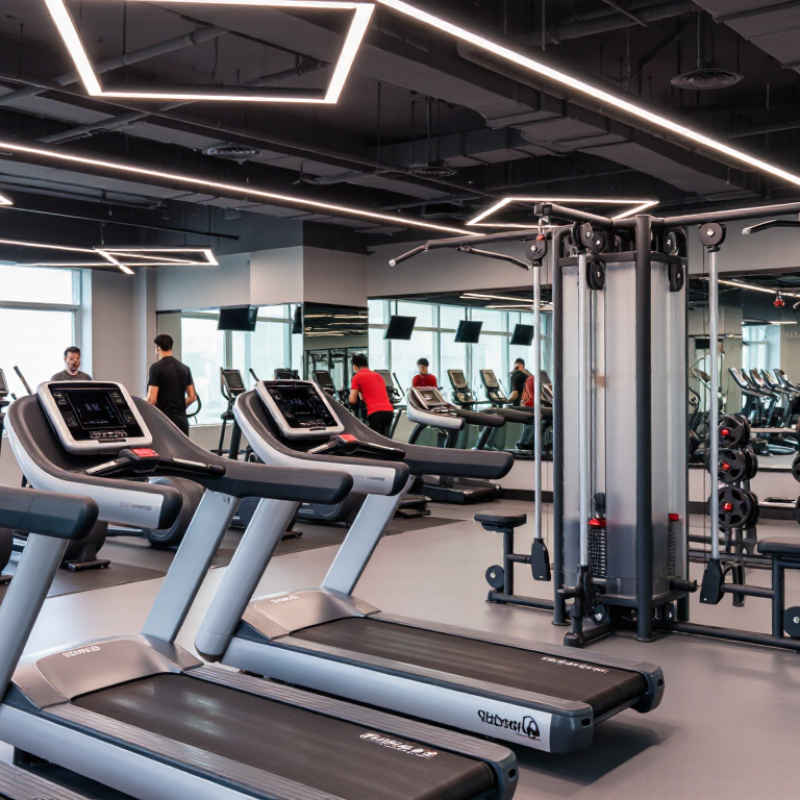
How to Choose a Commercial Gym Equipment Manufacturer?
The Health & Fitness Association reports 72.9 million U.S. fitness facility members. This benchmark shows the market’s scale, but it does not define every facility’s needs. A neighborhood gym may serve beginners, older adults, and short daily visits. A performance center may require heavier loads, faster adjustments, and stronger recovery support. Study your membership profile before comparing manufacturers. Review peak-hour traffic, available floor space, maintenance access, and expected equipment usage. Numbers need context.
From my experience, equipment plans often fail when owners count machines instead of member journeys. A crowded entrance, narrow walkway, or poorly placed storage area can reduce usability. Ask manufacturers for verified load ratings, warranty terms, service response times, replacement-part availability, and cleaning guidance. Request documentation from qualified technical teams. Test adjustment points with different users. I once underestimated cable-station clearance, and the installation felt cramped. That mistake was avoidable.
Tips: Compare capacity with your busiest hour, not your quietest day. Measure doorways, ceiling height, and turning space before ordering. Ask for references from facilities with similar membership patterns. Record every service promise in writing. Leave room for honest uncertainty; projected membership may change, and your first forecast may be wrong. A practical manufacturer should discuss those risks rather than promise effortless growth.
A practical benchmark table for evaluating capacity, equipment mix, safety, service, and lifecycle requirements.
| Planning Dimension | Verified Benchmark or Input | What the Facility Should Define | Manufacturer Requirement | Recommended Verification Metric |
|---|---|---|---|---|
| U.S. market demand | 72.9 million Americans aged 6 and older belonged to a fitness facility in 2023, according to the Health & Fitness Association benchmark. | Estimate the target member profile, peak attendance, visit frequency, and expected growth before selecting equipment quantities. | Ability to scale equipment orders, replacement parts, and technical support as usage grows. | Documented capacity plan covering opening day, peak demand, and a three-to-five-year growth period. |
| Market growth | The 2023 U.S. membership figure represented a 5.8% increase from 2022. | Allow for demand growth without overcrowding cardio areas or delaying equipment replacement. | Modular product lines, repeatable specifications, and reliable availability of identical or compatible units. | Written lead times, production capacity, upgrade paths, and parts availability for the planned ownership period. |
| Cardiovascular capacity | Cardio equipment typically experiences concentrated demand during opening, lunch, and after-work periods rather than uniform use throughout the day. | Separate equipment quantities by movement type: treadmills, ellipticals, bikes, rowers, and stair-climbing equipment. | Commercial-duty construction, continuous-use ratings, stable frames, emergency-stop features where applicable, and replaceable wear components. | Peak-hour utilization, average queue time, downtime percentage, and documented duty-cycle rating. |
| Strength-training demand | Strength areas require different equipment types for resistance training, free weights, functional movement, and supervised instruction. | Define the balance between selectorized machines, racks, benches, cable systems, free weights, and functional-training stations. | Stable bases, protected cables, durable upholstery, secure adjustment mechanisms, clear load ratings, and replaceable components. | Load rating, adjustment range, cycle testing, weld quality, cable inspection results, and warranty coverage for structural parts. |
| Space and layout efficiency | Available floor area, circulation paths, ceiling height, power access, ventilation, and flooring determine the usable equipment density. | Measure the room before ordering and reserve access space, operating clearances, storage, and maintenance access. | Accurate dimensional drawings, installation clearances, floor-loading data, power specifications, and anchoring requirements. | Final layout approval, measured clearance compliance, electrical load review, and delivery-path inspection. |
| Safety and compliance | Commercial equipment should be selected and installed according to applicable local regulations, accessibility requirements, and recognized fitness-equipment safety standards. | Create a safety checklist covering user access, moving parts, emergency stops, signage, anchoring, flooring, and inspection procedures. | Traceable test documentation, user instructions, risk warnings, maintenance procedures, and conformity with applicable standards. | Pre-opening inspection record, staff training completion, incident log, preventive-maintenance schedule, and audit trail. |
| Accessibility and inclusivity | A facility serving a broad U.S. member base should account for different ages, abilities, body sizes, and training experience. | Include accessible routes, varied seat and handle adjustments, low-step options, clear controls, and equipment suitable for multiple ability levels. | Accessible design information, adjustment ranges, transfer space requirements, readable controls, and compatibility with facility accessibility planning. | Accessibility walkthrough, user testing, adjustment-range review, and confirmation of applicable local requirements. |
| Technology and data | Connected consoles can support workout tracking, but technology requirements vary by facility operating model and member expectations. | Decide whether the facility needs basic displays, user profiles, usage analytics, remote monitoring, or integration with existing systems. | Clear data ownership, cybersecurity practices, software-support terms, offline operating capability, and transparent connectivity requirements. | Connectivity test, system compatibility review, data-export test, software-update policy, and support response time. |
| Maintenance and uptime | High-use commercial equipment requires routine cleaning, inspection, lubrication where applicable, calibration, and timely repair. | Set an acceptable downtime threshold and identify which maintenance tasks can be completed by in-house staff. | Service network, technician coverage, maintenance manuals, preventive-maintenance parts, and defined repair escalation procedures. | First-response time, average resolution time, parts lead time, uptime reporting, and service-level commitments. |
| Total cost of ownership | Purchase price alone does not represent the full cost of commercial equipment ownership. | Compare acquisition, delivery, installation, energy use, consumables, repairs, software, financing, and replacement costs. | Transparent pricing, warranty terms, consumable costs, energy specifications, repair pricing, and end-of-life support. | Five-year cost model including purchase, installation, service, parts, downtime, and planned replacement. |
| Procurement decision | A facility’s member volume, usage pattern, layout, staffing model, and service expectations should determine the final specification. | Use a weighted scorecard rather than selecting equipment based only on appearance or initial price. | Provide complete technical submittals, samples or demonstrations where practical, references for comparable commercial installations, and written after-sales commitments. | Score quality, safety, capacity, service, warranty, integration, delivery, sustainability, and five-year ownership cost. |
Study member types, peak traffic, floor space, and expected usage. A neighborhood gym may need beginner-friendly equipment and wider walkways. A performance center may need heavier loads and quicker adjustments. Numbers need context.
Quiet periods can hide equipment shortages. Count users between 6 a.m. and 8 a.m. Compare that demand with rated workloads and daily usage limits. Plan for growth, but avoid buying unused machines. Measure twice.
Measure doorways, ceiling height, floor space, and turning areas. Check cable-station clearance carefully. Narrow paths can create awkward movement and maintenance problems. I once underestimated clearance. The installation felt cramped.
Check coverage for frames, cables, upholstery, electronics, labor, and replacement parts. Read exclusions closely. A long frame warranty may cover very little else. Confirm transport costs too. Promises need proof.
Request written response targets for urgent repairs and normal questions. Ask who handles service locally. Contact the support channel before signing. A practical test reveals more than a polished presentation.
Ask about availability, delivery times, and compatible components. Request service records from similar facilities. A delayed part can affect classes, revenue, and staff morale. That delay hurt.
Include purchase, delivery, installation, software, energy, maintenance, parts, and disposal. Add likely repair costs over seven to ten years. Include downtime and labor. The purchase price is only one piece.
Review assumptions every year because membership and usage patterns change. Leave room for unexpected repairs and slower growth. My first forecast could be wrong. That is normal. Ignoring uncertainty is costly.
Choosing the right Commercial Gym Equipment Manufacturer requires more than comparing product prices. Start by defining your facility’s member capacity, training goals, available space, and expected usage, using the HFA benchmark of 72.9 million U.S. fitness members as useful market context. Confirm that the manufacturer follows ISO 20957-1 requirements and can provide current commercial safety testing records. You should also compare equipment load capacity, warranty coverage, spare-parts availability, and typical service response times.
A reliable decision should consider total cost of ownership across a realistic 7–10-year equipment life, including installation, maintenance, repairs, energy use, and replacement parts. Finally, assess manufacturing consistency through ISO 9001 certification, documented quality-control procedures, and, where possible, factory inspection data. A manufacturer that combines proven safety, durable construction, transparent service commitments, and strong quality management is more likely to support long-term facility performance and customer satisfaction.