Choosing Pin-Selected Cable Machines for your gym involves more than comparing prices, weight stacks, and polished finishes. The right equipment should support safe movement, efficient coaching, and consistent member use. A machine may look impressive under bright showroom lights, yet feel awkward when users adjust the seat or reach the first handle.
Strength and conditioning coach Mike Boyle has said, “If it’s important, do it every day.” That principle matters when selecting cable equipment. A reliable machine should make quality training easy to repeat. Look for smooth pulley travel, clear adjustment points, stable frames, and weight increments that suit beginners and experienced athletes. Test the handles yourself. Notice cable drag, pin alignment, and noise during a full movement.
Small details matter.
Gym owners should also consider floor space, maintenance access, warranty support, and the machine’s training range. A compact unit may fit beside a squat rack, but limited cable travel could reduce exercise options. A larger dual-adjustable system may serve more members, although it can create traffic around busy training zones.
There is no perfect choice. That is worth admitting. Even experienced buyers can overvalue appearance or underestimate daily maintenance. Speak with coaches, observe member behavior, and record how often each station is likely to be used. This practical evidence can guide a more dependable investment.
This guide explains how to compare Pin-Selected Cable Machines with greater confidence, using real training needs rather than marketing claims.
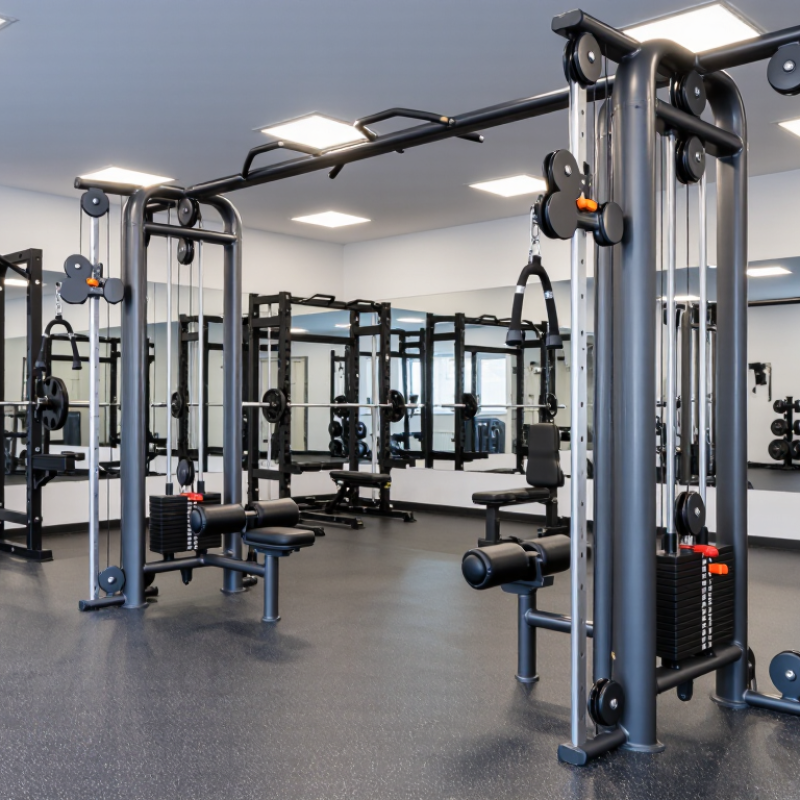
Pin-selected cable machines use a weight stack, guide rods, pulleys, and a selector pin. The pin changes resistance without adding loose plates. Unlike free weights, the cable guides the movement through a controlled path. This design can help beginners learn technique and help experienced users maintain steady tension. Still, the selected number does not always equal the force felt at the handle. Pulley ratios, friction, and cable angles affect resistance.
The main types serve different training needs. A lat pulldown station targets the back and arms with an overhead cable. A seated row machine uses a forward-pulling motion and supports the torso. A fixed cable station may provide exercises for the chest, shoulders, and legs. Dual adjustable pulley machines offer two independent cable columns, allowing users to train from various heights and angles. Multi-station systems combine several fixed exercises in one frame, saving floor space.
During equipment checks, I look for smooth cable travel, stable foot platforms, clear weight markings, and an easy-to-reach pin. The handle should return quietly without sudden drops. I also test the lowest resistance because beginners often need precise control. Check the machine’s load chart and applicable safety certification. A polished frame can hide poor alignment. No setup is perfect. Even experienced users should adjust the seat, pulley height, and range of motion for each exercise.
| Machine Type | Primary Training Function | Typical Exercise Options | Typical Resistance Range | Space Requirement | Best For | Main Advantages | Important Limitations | Selection Priority |
|---|---|---|---|---|---|---|---|---|
| Pin-Selected Lat Pulldown | Vertical pulling for the upper back, latissimus dorsi, biceps, and rear shoulders. | Wide-grip pulldown, close-grip pulldown, underhand pulldown, and neutral-grip pulldown. | Commonly about 5–100 kg, depending on the weight stack and pulley ratio. | Approximately 1.5–2.5 m², plus clearance for the user and attachment movement. | Beginners, general fitness areas, and strength circuits. | Easy resistance changes, guided movement, stable seated position, and straightforward user instruction. | Primarily focuses on vertical pulling and may provide limited lower-body or multi-directional training. | Choose when back training and simple operation are priorities. |
| Pin-Selected Low Row | Horizontal pulling for the middle back, latissimus dorsi, biceps, and posterior shoulders. | Seated cable row, close-grip row, and neutral-grip row. | Commonly about 5–100 kg, with the exact range determined by the stack and pulley configuration. | Approximately 1.5–2.5 m², with extra room for handle travel. | Users seeking balanced back development and posture-focused training. | Supports controlled rowing mechanics and allows quick resistance adjustments between users. | Requires appropriate seat and foot support; exercise variety is narrower than on a functional trainer. | Choose when horizontal pulling is needed to complement pulldown work. |
| Cable Crossover | Independent upper- and lower-pulley training through a broad range of motion. | Chest fly, cable press, lateral raise, face pull, wood chop, triceps pressdown, and cable curl. | Often about 2–40 kg per side, although stack capacities vary considerably. | Approximately 4–8 m², including space between the towers and user movement clearance. | Commercial gyms and facilities requiring many upper-body exercise options. | Two independent cable stations support bilateral and unilateral exercises with flexible angles. | Needs considerable floor space and may have lower maximum resistance than dedicated strength machines. | Choose when exercise variety and simultaneous use are important. |
| Functional Trainer | Multi-directional resistance training for strength, mobility, athletic movement, and rehabilitation-style exercises. | Presses, rows, flyes, rotations, anti-rotation work, squats, lunges, chops, curls, and triceps exercises. | Frequently about 2–40 kg per side; some models provide heavier stacks for advanced users. | Approximately 4–7 m², plus sufficient clearance around the adjustable pulleys. | Personal training studios, performance areas, and mixed-use gyms. | Adjustable pulley height and independent sides allow many movement patterns and training positions. | Higher purchase and maintenance complexity; users need more instruction than with fixed-path machines. | Choose when versatility and trainer-led programming are central requirements. |
| Adjustable Pulley Station | Single- or dual-side cable training with adjustable pulley positions. | Single-arm row, cable curl, triceps extension, lateral raise, chest press, and rotational exercises. | Commonly about 2–40 kg per side, depending on the stack and mechanical ratio. | Approximately 1.5–3 m² per station, excluding wider exercise clearance. | Small gyms, compact training rooms, and facilities with limited floor space. | Offers useful exercise variety in a smaller footprint than a full crossover or functional trainer. | One station may limit simultaneous use and may not provide enough resistance for advanced compound lifting. | Choose when space efficiency is more important than maximum capacity. |
| Pin-Selected Cable Column | Compact cable resistance for isolated and accessory exercises. | Triceps pressdown, biceps curl, face pull, single-arm raise, cable kickback, and light rotational work. | Typically about 2–30 kg, although commercial units may offer higher stacks. | Approximately 1–2 m², plus operating clearance. | Small facilities, rehabilitation areas, and accessory-training zones. | Compact design, simple pin selection, and convenient access to common isolation exercises. | Usually offers less stability, loading capacity, and exercise variety than larger cable systems. | Choose for accessory work where floor space is limited. |
| Dual Adjustable Pulley with Chin-Up Station | Combines adjustable cable training with bodyweight pulling and core exercise options. | Assisted or unassisted pull-ups, cable rows, presses, flyes, pulldowns, chops, and anti-rotation exercises. | Commonly about 2–40 kg per cable side, with pull-up capacity determined by the frame rating. | Approximately 5–8 m², including overhead and surrounding clearance. | Facilities wanting a central multi-purpose strength station. | Combines cable versatility with bodyweight training and can support multiple programming styles. | Taller frame and larger footprint may be unsuitable for rooms with low ceilings or restricted access. | Choose when one station must support broad full-body programming. |
Buying note: Actual dimensions, stack capacities, pulley ratios, frame ratings, and required clearance vary by machine design. Confirm the manufacturer’s technical specifications, floor loading, ceiling height, accessibility, and applicable safety requirements before purchase.
Measure walking paths, ceiling height, doors, and nearby equipment. Mark a 2.5-meter working zone with tape. Leave breathing room. Check arm extension near racks and walkways.
Count users during peak hours for seven days. Record queue times and popular training patterns. Observe beginners, experienced members, and older adults. Projected membership numbers can mislead.
Choose numbered seat settings, adjustable chest pads, and independent arms. Small adjustment steps support shorter users and longer-limbed athletes. Controls should lock firmly and release quickly. Test every setting with one hand.
Useful options include presses, rows, pulldowns, curls, and triceps exercises. Rear-delt movements can add practical variety. More exercises are not always better. Movement quality matters more.
Ask three different users to adjust the seat and select a pin. Have each person complete ten controlled repetitions. Watch hand position, posture, and cable direction. Test it slowly. Unclear instructions may reveal a poor design.
Inspect welds, cable routing, pulley guards, and weight-stack movement. The frame should resist rocking during rows and presses. Handles should avoid sudden cable pulls. Quiet operation suggests good alignment, but it proves nothing.
Include flooring, delivery, assembly, maintenance, cable replacement, and future repairs. The lowest quote may create higher long-term costs. Reserve money for unexpected problems. I sometimes underestimate service expenses.
Check floor strength, leveling, anchor points, cable routing, and bolt tightness. Keep the assembly area clear. Test every pulley, pin, and adjustment before opening. Record inspection dates and equipment details.
Walk through every exercise path after installation. Check clearance beside racks, doors, and busy walkways. Invite a trainer to test user positions. The first plan may still be wrong. Reconsider oversized units if circulation feels cramped.
Choosing the right Pin-Selected Cable Machines is an important decision for any gym because the equipment must match available space, user needs, and training goals. Start by understanding the main machine types and consider whether your members need options for strength training, rehabilitation, functional movement, or full-body workouts. Review each machine’s size, cable travel, weight stack, adjustment system, and exercise variety to ensure it can support both beginners and experienced users.
Build quality and safety should also be priorities. Look for stable frames, smooth cable movement, secure locking mechanisms, comfortable attachments, and simple maintenance requirements. Check the warranty and availability of replacement parts before making a decision. Finally, create a realistic budget that includes delivery, installation, flooring, and future servicing. A carefully planned layout can improve traffic flow and user safety, while comparing several suitable options will help you select a durable, versatile, and cost-effective machine for your gym.

