0%

Choosing Plate-Loaded Strength Machines requires more than comparing steel frames and maximum capacities. The right decision connects biomechanics, user safety, facility workflow, and long-term maintenance. ACSM’s 2025 Worldwide Survey of Fitness Trends continues to place traditional strength training among the industry’s strongest directions. IHRSA’s Global Report also reflects sustained demand for resistance-based training across commercial and community facilities. These findings suggest a practical reality: strength equipment remains valuable, but buyers must examine how people will actually use it.

Dr. Brad Schoenfeld, a leading resistance-training researcher, often emphasizes, “The best program is the one you can stick to.” That principle applies to equipment selection. A machine should offer a stable movement path, clear loading positions, comfortable adjustments, and enough range for different body sizes. Inspect the plate horns closely. Check whether a lifter can enter and exit without twisting. Measure the footprint with weight plates loaded, not empty. Small details matter.

No machine is perfect. A heavily advertised frame may still feel awkward during pressing or rowing. More plate capacity does not guarantee better training. Buyers should compare weld quality, upholstery, bearings, safety stops, warranty terms, and service access. Facility owners should also consider noise, floor protection, and cleaning routines. This guide examines these factors through an evidence-informed lens. Some recommendations may require compromise, especially when space and budget are limited. Careful testing remains essential before purchase.
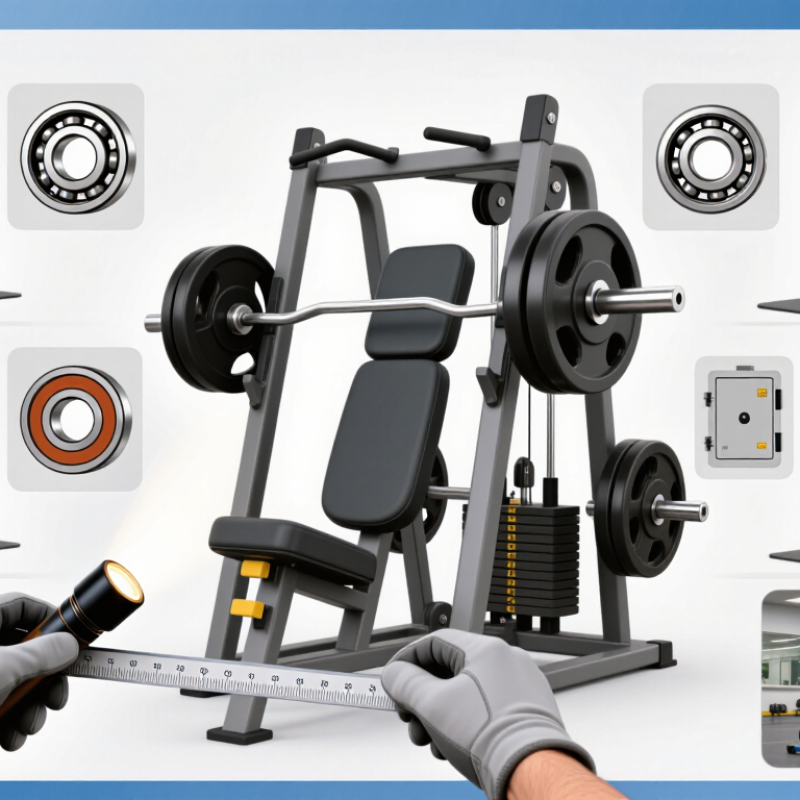
How to Choose Plate Loaded Strength Machines?

Define Plate-Loaded Machines Through ISO 20957 Safety Standards

How to Choose Plate Loaded Strength Machines?

Plate-loaded machines use removable weight plates to create resistance, but safety begins before the first repetition. ISO 20957 provides a useful framework for evaluating stationary training equipment. For strength machines, review the applicable general requirements and strength-equipment provisions. Do not assume that a machine is compliant because it carries a standards reference. Request test reports, user instructions, maintenance guidance, and declared load limits from the supplier.

Look closely at the frame, welds, adjustment points, and plate-storage posts. A stable base should remain firm when the machine is loaded unevenly. Handles must resist expected forces without sharp edges or excessive movement. Check whether moving arms create pinch, crush, or shear points during a full range of motion. Clear warnings should explain loading, adjustment, inspection, and safe use. Small details matter here.

Test the machine with an experienced operator before purchase. Load plates gradually and observe frame movement, noise, and unwanted sway. Confirm that users can reach the handles without twisting their backs. Leave enough clearance around moving parts and emergency exit paths. I would not treat a polished finish as proof of quality. A checklist can still miss poor ergonomics. Recheck the evidence, the physical machine, and the intended user group before making a decision.

Match Machine Type to Target Muscles and Movement Patterns

Choosing plate-loaded strength machines becomes easier when the target muscle and movement pattern come first. A chest press should reproduce a controlled horizontal push, not simply accept heavy plates. For back training, compare machines that guide a row, pulldown, or extension. Each pattern loads different tissues and creates different shoulder demands. In my coaching experience, lifters often choose the machine with the largest weight horn. That choice can miss the real purpose. Start with the movement you need to improve.

Check the machine’s resistance curve through the full range. A squat pattern should feel stable near the bottom, while a hip-dominant machine should allow a clear hinge. Handles should fit your joint path without forcing your wrists or elbows. Adjust the seat, chest pad, and starting position carefully. Small changes matter. I have seen strong users shorten the range to move more plates. It looks impressive, but it may weaken muscle-specific work. I still question whether every “natural” path suits every body.

Tips: Write down the target muscle and movement pattern before testing a machine. Use a light load for ten controlled repetitions. Notice where tension fades or joints feel crowded. Ask a qualified trainer to check alignment from the side. Leave room for doubt. A machine can feel comfortable and still hide poor positioning. Review your choice after several sessions, not after one exciting workout.

Compare Load Capacity, 2-Inch Olympic Plates, and Resistance Ratios

How to Choose Plate Loaded Strength Machines?

Choosing a plate loaded strength machine starts with load capacity, not appearance. The frame, sleeves, bearings, and joints must support the intended training load. A high capacity rating does not always mean better performance. It may hide poor movement quality or uncomfortable positioning. Check the recommended plate limit, user weight limit, and adjustment range. Leave a safety margin instead of training at the stated maximum every session. I once focused too much on capacity and ignored the seat angle. The machine felt strong but awkward.

Confirm that the machine accepts standard 2-inch Olympic plates. Measure the sleeve length and diameter before purchase. Longer sleeves allow more plates, but they may increase leverage and change the exercise feel. Use matching plates with secure collars. Loose plates can shift during pressing or rowing. Also inspect the sleeve finish, welds, and contact points. Small details matter.

Resistance ratios require careful attention. A 1:1 ratio usually delivers resistance close to the loaded weight through the cable path. A 2:1 ratio often makes the handle feel about half the loaded resistance, while increasing movement distance. Lever machines may change resistance across the range of motion. The first few inches can feel easy, then suddenly heavy. Test the machine with light plates and slow repetitions. Record the starting effort, sticking point, and end-range control. Manufacturer figures help, but real movement can disagree. That difference deserves honest evaluation.

How to Choose Plate Loaded Strength Machines?

Compare load capacity, 2-inch Olympic plates, and resistance ratios

The chart uses representative, non-brand specifications commonly found in commercial plate-loaded equipment. All examples use standard 2-inch Olympic plate sleeves. Maximum added load depends on the frame, loading horns, lever geometry, and manufacturer rating. A 1:1 resistance ratio applies approximately the same force at the handle as the loaded resistance, while a 2:1 cable ratio generally provides smoother movement with lower resistance at the handle.

Evaluate Adjustability Using ACSM’s 60–70% 1RM Training Range

How to Choose Plate Loaded Strength Machines?

Adjustability should be judged against real training targets, not appearance. ACSM’s Guidelines for Exercise Testing and Prescription, 11th edition, commonly places novice and intermediate resistance work near 60–70% of 1RM. That range often supports 8–12 controlled repetitions. A suitable plate loaded machine should let users reach this zone without awkward joint positions.

Check the seat height, back-pad angle, lever starting point, and handle position. Each adjustment should move smoothly and lock firmly. A user should align the machine’s pivot with the working joint. Small detail. Poor alignment can shift stress toward the shoulder, knee, or lower back. Test the machine with light plates first, then add weight gradually. If 60% 1RM feels like a near-maximal effort, the starting resistance may be excessive.

The Health & Fitness Association’s 2024 U.S. Consumer Report recorded 72.9 million fitness-facility members in 2023. That scale increases the need for equipment that fits different bodies. A machine serving many users needs clear settings, quick changes, and repeatable positioning. ACSM’s 2024 Worldwide Survey also kept traditional strength training among major industry trends. My practical concern is often overlooked: plate jumps may be too large for smaller users. A reliable machine supports micro-loading, stable movement, and honest progression. Not perfectly. Individual assessment still matters.

Verify Biomechanics, Durability, Maintenance, and User Safety

How to Choose Plate Loaded Strength Machines?

A reliable plate loaded machine should match natural human movement. Check the lever path, pivot position, and starting angle before comparing appearance. The handles should follow a controlled arc without forcing the wrists or shoulders. I test each machine with light plates first. This reveals awkward resistance changes and unstable movement. Foot platforms must remain firm during pressing or rowing. Small alignment errors can become painful under heavy loads.

Durability depends on more than thick steel. Inspect welds, frame joints, guide rods, bearings, and adjustment pins closely. Surfaces should resist sweat, impact, and repeated cleaning. Ask for verified load ratings and documented testing, not vague strength claims. I once underestimated a loose adjustment pin because the frame looked solid. That was a useful reminder. Appearance can hide weakness.

Maintenance should be practical for busy facilities. Choose equipment with accessible bolts, replaceable wear parts, and clear service instructions. Check cables, pads, handles, and locking points on a fixed schedule. Keep a simple inspection log. It helps staff notice gradual changes. User safety also depends on clear instructions, visible plate storage, and secure loading points. Test the machine without plates, then with a moderate load. Stop immediately if you hear grinding, feel side movement, or cannot maintain control. A perfect checklist still needs careful human judgment.

FAQS

How should I choose a plate-loaded strength machine?

Start with the target muscle and movement pattern. A chest press should create a controlled horizontal push. A row, pulldown, and extension stress the back differently. The largest weight horn is not always useful. Purpose matters more.

What should I test before adding heavy plates?

Use a light load for ten controlled repetitions. Check the movement from start to finish. Notice unstable points, fading tension, or crowded joints. Test slowly.

How can I check whether the machine fits my body?

Adjust the seat, chest pad, handles, and starting position carefully. Your wrists and elbows should follow a comfortable path. Ask a qualified trainer to observe your alignment from the side. Small adjustments can change the exercise.

Why does the resistance curve matter?

Resistance should remain suitable across the full range. A squat pattern should feel stable near the bottom. A hip-focused machine should allow a clear hinge. A heavy load cannot repair a poor movement path.

What construction details deserve close inspection?

Examine welds, frame joints, guide rods, bearings, and adjustment pins. Check for firm foot platforms during pressing or rowing. Thick steel alone does not prove durability. Appearance can hide weakness.

How can I judge maintenance requirements?

Look for accessible bolts, replaceable wear parts, and clear service instructions. Inspect cables, pads, handles, and locking points regularly. Keep a simple inspection log. Small changes become easier to notice.

What safety checks should users complete before training?

Test the machine without plates, then use a moderate load. Confirm secure plate storage and stable loading points. Stop if grinding, side movement, or poor control appears. Do not force the set.

Can a comfortable machine still be poorly designed for me?

Yes. Comfort may hide poor positioning. A shortened range can move more plates while reducing muscle-specific work. I still question whether every “natural” path suits every body. Review the choice after several sessions.

Conclusion

Choosing Plate-Loaded Strength Machines requires more than comparing appearance or price. Start by understanding how the equipment fits within ISO 20957 safety principles, including stability, guarding, structural integrity, and safe user interaction. Then match each machine to the intended muscles and movement patterns, such as pressing, pulling, squatting, or hip extension. Consider whether the design supports natural joint alignment and provides suitable adjustments for different body sizes and training preferences.

Next, evaluate load capacity, compatibility with standard 2-inch Olympic plates, and the machine’s resistance ratio throughout its range of motion. Adjustability should allow users to train effectively within the ACSM-recommended 60–70% of one-repetition maximum for many general strength applications, while still accommodating progressive overload. Finally, inspect the frame, pivots, bearings, upholstery, welds, and maintenance requirements. Clear instructions, secure plate storage, controlled movement, and reliable safety features are essential for long-term durability and responsible use.

Ethan Blackwood

Ethan Blackwood

Ethan Blackwood is a highly experienced marketing professional dedicated to helping businesses understand products, services, and market opportunities with greater clarity. With a strong background in strategic communication, customer research, content development, and digital marketing, Ethan......