0%

Institutional Fitness Equipment is designed for gyms that serve many people, across long operating hours. Schools, recreation centers, apartment complexes, and workplace fitness rooms often face heavy daily use. A treadmill may run through back-to-back sessions, while dumbbells are returned to racks dozens of times. These conditions make durability, service access, and clear operating instructions important considerations. So is a sensible fit for the available space.

Choosing equipment involves more than comparing prices or counting features. Buyers can review frame construction, weight limits, warranty terms, replacement-part availability, and cleaning requirements. A qualified facilities manager or fitness professional can help match equipment to users’ needs and the room’s layout. Leave enough clearance around moving parts and plan where users will walk between stations. Small details matter.

Still, there is no perfect setup for every institution. A feature-rich machine may be poorly suited to a small room, and sturdy equipment can still need regular inspection. That is worth remembering. Before purchasing, consider who will use each item, how often it will be used, and who will maintain it. Ask suppliers specific questions and verify their answers against product documentation. Institutional Fitness Equipment can support consistent, accessible training when selection reflects real users, realistic budgets, and a practical maintenance plan—not just impressive specifications.
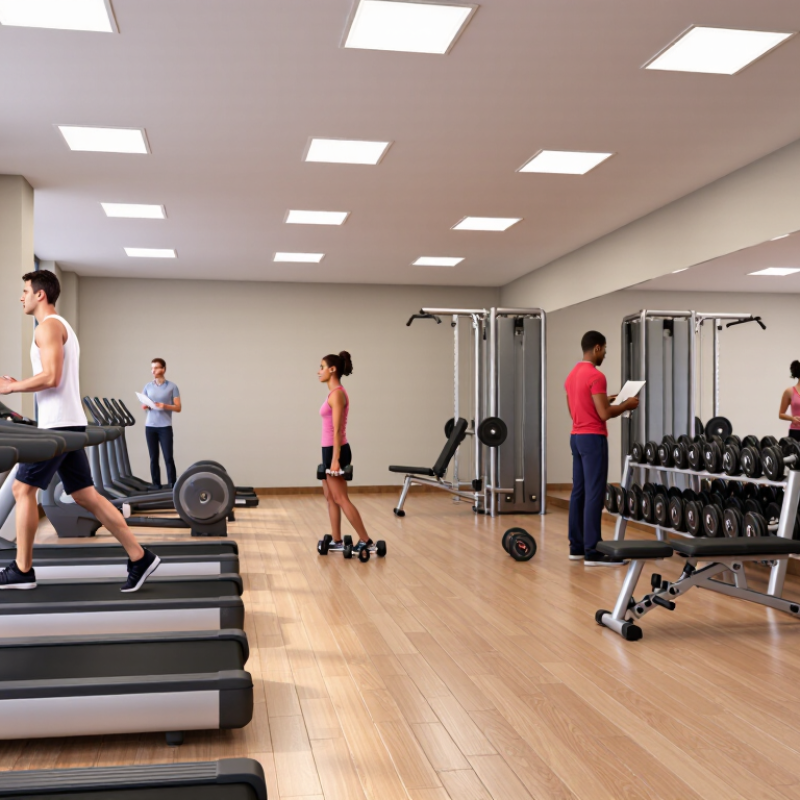
Why Choose Institutional Fitness Equipment?

What Institutional Fitness Equipment Is and How It Differs

Why Choose Institutional Fitness Equipment?

What Institutional Fitness Equipment Is and How It Differs

Institutional fitness equipment is designed for shared spaces where many people train throughout the day. These settings include schools, workplaces, community centers, hotels, and rehabilitation facilities. Unlike home equipment, it must tolerate frequent use by people with different body sizes, abilities, and training experience.

A commercial-grade treadmill, for example, may have a sturdier frame, a motor selected for repeated sessions, and components intended for easier maintenance. Strength machines often offer clear adjustment points, durable upholstery, and simple instructions that help users set up safely.

Built for traffic. Not indestructible.

Facilities still need routine inspections, cleaning, and repairs.

The difference also involves planning. Equipment choices should reflect room size, user needs, supervision, and the kinds of exercise people actually perform. A school may prioritize simple adjustments and broad accessibility, while a staff gym may need compact equipment for short workouts. Look closely at warranties, replacement-part access, service requirements, and applicable safety certifications. Those details can be less exciting than a sleek console, but they affect long-term reliability. Even a heavy-duty machine can be the wrong choice if controls confuse users or maintenance is neglected. That part is easy to underestimate.

Where Institutional Fitness Equipment Is Used

Institutional fitness equipment is used wherever many people need reliable, supervised access to exercise: schools, universities, workplaces, hotels, community centers, and rehabilitation facilities. A school gym may need adjustable benches and durable strength stations for students of different sizes. A community center may serve older adults in the morning, then host youth training after class.

That matters. WHO’s 2022 Global Status Report on Physical Activity cites estimates that 27.5% of adults and 81% of adolescents worldwide were not sufficiently active. Shared facilities can lower practical barriers, but only when equipment suits the people using it.

The setting should guide the selection. In a campus recreation room, clear spacing and equipment that supports varied ability levels can help reduce crowding and make supervised sessions easier. Workplace gyms often benefit from simple, quick-to-adjust machines that fit short breaks.

WHO recommends adults get 150–300 minutes of moderate activity weekly, while children and adolescents should average 60 minutes daily. Equipment can support those routines; it cannot create them by itself. Honestly, a room full of machines may still sit unused if access feels confusing or maintenance is overlooked. A loose cable or unclear adjustment label can change how safe a space feels.

How Its Design Meets the Needs of Shared Facilities

Shared facilities serve people with different ages, abilities, and training habits. Equipment must be easy to understand, sturdy under frequent use, and simple to maintain. The Health & Fitness Association’s 2024 U.S. Health & Fitness Consumer Report counted 72.9 million U.S. health-club members in 2023. That scale makes small design choices matter: clear adjustment labels, accessible entry points, and controls users can operate without coaching.

Durability is more than a thick steel frame. Look for stable bases, replaceable wear parts, wipeable contact surfaces, and upholstery that withstands repeated cleaning. In a busy community gym, a loose seat or confusing pin setting can interrupt a workout and create extra work for staff. Details matter. Still, heavy-duty equipment can feel intimidating when adjustment points are crowded or poorly marked.

Inclusive design matters, too. ACSM’s 2024 Worldwide Survey of Fitness Trends ranked fitness programs for older adults third among its trends. That points to a practical need for equipment with manageable starting resistance, steady handholds, and smooth adjustments. Leave enough room for users to approach, transfer, and move safely around stations. A perfect layout is rare; observe where people hesitate, then adjust the setup.

Why Choose Institutional Fitness Equipment? — How Its Design Meets the Needs of Shared Facilities

Design Consideration Typical Institutional Design Approach Why It Matters in a Shared Facility
Frequent, varied use Equipment is commonly specified with robust frames and components intended for repeated use by many people. Shared gyms experience changing users and workout patterns throughout the day, so equipment needs to suit regular use beyond a single household routine.
Adjustability Seats, pads, resistance settings, and other contact points are often designed to accommodate different body sizes and experience levels. More users can set up equipment for their needs, helping a facility serve a broad membership or resident population.
Clear operation Many machines use visible adjustment points, labeled settings, and guided movement paths. Intuitive setup can make equipment easier for first-time users to understand and can reduce reliance on staff for routine explanations.
Stability and controlled movement Commercial and institutional models commonly emphasize a stable base, secure components, and predictable movement during exercise. Stable equipment is important when users have different levels of strength, coordination, and familiarity with a particular exercise.
Maintenance and service Serviceable components and access to maintenance documentation are common considerations when selecting equipment for facilities. Routine inspection and timely repairs help operators keep equipment in usable condition and address wear or damage.
Cleaning between users Equipment with accessible surfaces and straightforward contact areas can be easier to wipe down as part of a facility’s cleaning routine. Multiple people may use the same handles, seats, and pads in a day, making practical cleaning procedures important.
Space and circulation Facility planning considers equipment footprint, operating clearance, access routes, and the flow of people between stations. Thoughtful layout helps users move around equipment safely and keeps busy areas from becoming unnecessarily congested.
Range of training options A facility may combine strength, cardiovascular, and functional-training equipment rather than relying on a single equipment type. A mix of equipment supports varied workout preferences and helps a shared space serve users with different fitness goals.
Accessibility and inclusive use Equipment selection and layout can account for approach space, reach, transfer needs, and accessible routes. Considering these factors helps more people use the facility, while specific accessibility needs should be assessed against applicable standards and user requirements.

Key Benefits for Users and Facility Operators

Institutional fitness equipment supports users who need safe, straightforward ways to train across different ability levels. Adjustable seats, clearly marked weight stacks, and accessible walkways make a room easier to navigate. Durable frames and replaceable parts can also reduce downtime when equipment sees heavy daily use. Small details matter. A loose pin or confusing adjustment can disrupt a workout and frustrate staff.

The Health & Fitness Association’s 2024 Global Report estimated that fitness facilities worldwide served 184 million members in 2023, across more than 210,000 locations. Those figures show the scale of facility-based exercise, not that any single equipment choice guarantees better results. For operators, consistent maintenance, staff training, and sensible equipment spacing remain essential. Even robust equipment needs attention.

Tip: Check adjustment points, cable condition, and floor clearance during routine inspections. Ask users which machines feel difficult to set up; their feedback may reveal a design issue staff have overlooked.

For users, well-chosen equipment can make strength training feel less intimidating and support a wider range of movements. Clear instructions and stable contact points help people focus on form instead of figuring out the machine. Operators may benefit from standardized parts and service schedules, but those choices can limit flexibility if needs change. That trade-off deserves review. A practical selection process weighs safety, accessibility, repair time, and the actual activities members use most.

Factors to Consider When Choosing Equipment

Choosing institutional fitness equipment starts with the people who will use it, not the catalog. A school weight room, rehabilitation clinic, and apartment gym face different traffic, supervision, and training needs. Estimate peak-hour users, age ranges, experience levels, and available staff. Match equipment to common movements and skill levels. Machines with clear adjustments can help beginners. Racks and free weights offer flexibility but need adequate space and instruction. Small details matter. A seat pin that is hard to see can slow a busy session.

Judge durability by construction, service access, and expected use, rather than appearance alone. Ask how often cables, upholstery, and bearings need inspection, and whether replacement parts are available. Check the footprint while allowing people to move around each station. A machine may fit on paper yet leave a cramped walkway. Include flooring, ceiling height, ventilation, and storage in the plan. Layouts can look generous before users arrive.

Comfort and inclusion deserve practical testing. Have intended users try seat adjustments, grip positions, step-over height, and controls before ordering. Consider different body sizes and mobility levels, along with whether instructions are easy to read. Compare purchase price with maintenance demands and possible downtime; a low-cost machine may become expensive if often unavailable. No choice is perfect. Reserve budget for routine inspections, because sturdy equipment still needs attention.

Why Choose Institutional Fitness Equipment? — Accessibility Dimensions to Consider

When choosing equipment, consider whether users can approach and maneuver around it. ADA standards specify a clear floor space of at least 30 × 48 inches and a wheelchair turning space; the chart shows the relevant dimensions in inches. Check applicable accessibility requirements and equipment layout for your facility.

Source: 2010 ADA Standards for Accessible Design, Sections 304.3, 305.3, and 1004.1.

FAQS

What is institutional fitness equipment?

It is equipment made for shared spaces, such as schools, workplaces, hotels, and community centers. Many different people may use it each day.

How does it differ from home fitness equipment?

It often has sturdier frames, components suited to repeated sessions, and parts designed for easier maintenance. Built for traffic. Not indestructible.

What should facilities consider before choosing equipment?

Consider room size, user needs, supervision, and common exercise routines. A compact staff gym may need different equipment than a school.

Which features help users operate equipment safely?

Clear adjustment labels, accessible entry points, and simple controls can make setup easier. Confusing settings can leave users unsure.

What makes equipment durable in a busy facility?

Look for stable bases, replaceable wear parts, wipeable surfaces, and upholstery that tolerates frequent cleaning. A thick frame alone is not enough.

How can equipment support older adults and users with different abilities?

Manageable starting resistance, steady handholds, and smooth adjustments can help. Leave room to approach, transfer, and move around each station.

What maintenance should facilities expect?

Plan for routine inspections, cleaning, and repairs. Check service requirements and replacement-part access before buying; those details are easy to overlook.

How can a facility tell whether its layout works?

Watch where people hesitate or struggle to reach equipment, then adjust the setup. A perfect layout is rare, and observation can reveal overlooked problems.

Conclusion

Institutional Fitness Equipment is designed for shared environments such as schools, gyms, hotels, community centers, and workplace wellness spaces. Unlike equipment intended mainly for personal home use, it is built to accommodate frequent use by many people with different fitness levels and needs. Its design often emphasizes durability, straightforward adjustments, stable construction, and accessible operation, helping users exercise comfortably while supporting reliable day-to-day facility use.

Choosing the right equipment can benefit both members and operators: users gain access to practical, versatile ways to build strength and improve fitness, while facilities can make better use of their space and manage ongoing maintenance needs. Before selecting equipment, consider the facility’s size, typical users, available budget, intended activities, ease of cleaning, safety features, and long-term upkeep. Matching these factors to the needs of the space helps create a useful, welcoming fitness area that can serve its community over time.

Ethan Blackwood

Ethan Blackwood

Ethan Blackwood is a highly experienced marketing professional dedicated to helping businesses understand products, services, and market opportunities with greater clarity. With a strong background in strategic communication, customer research, content development, and digital marketing, Ethan......