Explore our export-grade fitness machinery, precision weightlifting bars, and custom facility equipment manufactured for maximum durability and biomechanical efficiency.
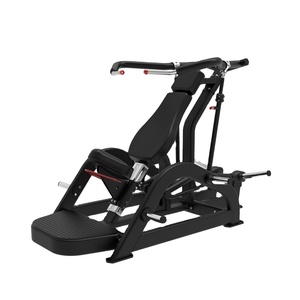
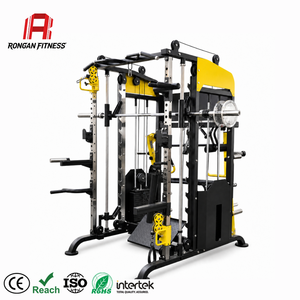
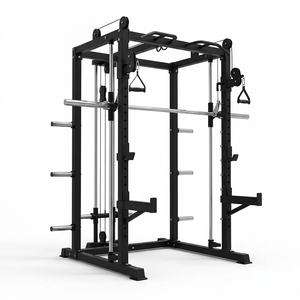
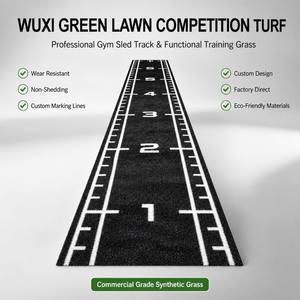
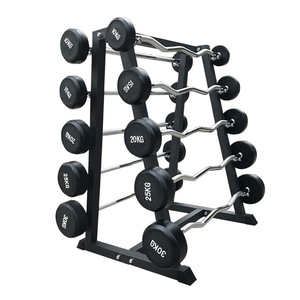
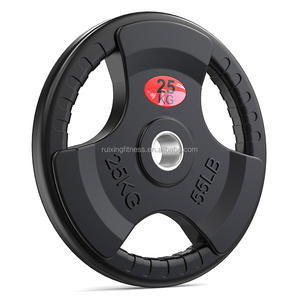
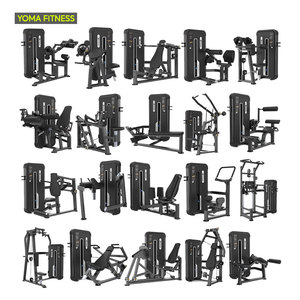
In the high-intensity environment of commercial health clubs, CrossFit boxes, and competitive weightlifting facilities, the barbell serves as the fundamental anchor of strength training. As a premier original equipment manufacturer (OEM) and global exporter, our engineering philosophy focuses on eliminating structural deformation, optimizing knurl ergonomics, and delivering zero-tolerance sleeve rotation.
A superior Olympic barbell is defined by metallurgical precision. Standard commercial bars frequently suffer from permanent shaft bending when subjected to heavy loads or repeated drops on rigid platform surfaces. Our facility addresses this critical failure point by employing heat-treated alloy steel rated between 190,000 PSI and 215,000 PSI tensile strength. This provides the optimal elastic deformation zone ("whip") required for Olympic lifts while guaranteeing high yield strength for heavy powerlifting squats and deadlifts.
Information Gain Insight: Tensile strength alone does not dictate a barbell's longevity. Yield strength—the threshold at which steel permanently warps—must be synchronized with the shaft's diameter (28mm for Olympic weightlifting, 28.5mm for multi-purpose, and 29mm for powerlifting) and ultrasonic flaw detection testing to prevent microscopic shear failure under cyclical stress.
The internal mechanical assembly of the sleeve dictates force dissipation during explosive movement patterns. Cheap bars utilize rudimentary plastic bushings or low-grade steel rings that generate friction, lock under load, and apply torque directly to the athlete's wrists and elbows. Our OEM custom barbells integrate high-precision needle bearing systems combined with self-lubricating bronze bushings:
Utilizing 4, 8, or 10 needle bearing sets per sleeve, designed for Olympic weightlifting (Snatch and Clean & Jerk) to deliver smooth, low-friction rotation during rapid turnover phases.
Self-lubricating bronze alloys engineered for heavy powerlifting bars (Bench Press, Squat, Deadlift) where controlled spin and rigid axial stability under 1,000+ lb loads are critical.
Heavy-duty alloy snap-ring design replacing outdated hex bolt mechanisms, ensuring sleeves never loosen, strip, or detach during high-volume drop cycles.
To assist equipment distributors, commercial gym buyers, and private-label brand managers in specifying the exact hardware for their target demographics, we provide our standard OEM engineering parameters below:
| Specification Parameter | Commercial Men's Olympic Bar | Commercial Women's Olympic Bar | Competition Powerlifting Bar |
|---|---|---|---|
| Bar Weight | 20 kg (44 lbs) ± 1% | 15 kg (33 lbs) ± 1% | 20 kg (44 lbs) ± 0.5% |
| Shaft Diameter | 28.0 mm / 28.5 mm | 25.0 mm | 29.0 mm |
| Tensile Strength Rating | 190,000 – 215,000 PSI | 190,000 – 205,000 PSI | 205,000 – 230,000 PSI |
| Knurling Profile | 1.2mm Diamond Fine / Volcano | 1.2mm Diamond Fine | 1.5mm Aggressive Volcano / Hill |
| Sleeve Rotation System | 8 Needle Bearings + Bushing | 4 or 8 Needle Bearings | Self-Lubricating Composite Bushings |
| Surface Finish Options | Hard Chrome / Cerakote / Black Zinc | Cerakote Colors / Hard Chrome | Raw Steel / Electroless Nickel / Hard Chrome |
| Static Weight Capacity | 1,500 lbs (680 kg) | 1,000 lbs (450 kg) | 2,000 lbs (900 kg) |
The global commercial fitness manufacturing landscape is undergoing a structural transition driven by changes in consumer workout modalities, supply chain security, and materials technology. Institutional procurement officers and fitness brand importers must adapt to several emerging trends shaping the 2025–2030 horizon:
Traditional decorative chrome plating is rapidly declining in favor of thin-film ceramic coatings (Cerakote) and specialized electroless nickel finishes. Cerakote offers over 100 times the corrosion resistance of standard black oxide or bright zinc in salt spray testing. Furthermore, it enables OEM clients to customize shaft colors (Matte Black, Olive Drab, Crimson, Titanium Silver) while maintaining tactile knurl precision, satisfying the modern commercial gym's aesthetic branding requirements.
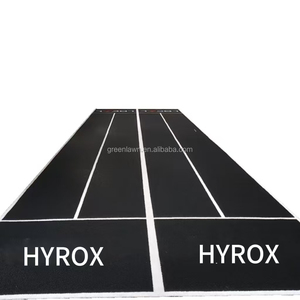
Modern commercial gyms are moving away from single-station isolated strength machines toward hybrid functional training zones. High-traffic facilities now integrate custom Olympic lifting platforms, sled-pushing artificial turf runways (such as HYROX-compliant weighted sled carpet), and comprehensive Smith machine racks into single cohesive floor plans. OEM suppliers who provide end-to-end solutions—matching barbells, rubber bumper plates, power racks, and specialized turf flooring—reduce logistics overhead and simplify quality assurance for importers.
B2B fitness buyers no longer accept generic unbranded hardware. The market demands granular OEM customization: custom laser-etched logos on barbell sleeve end-caps, color-matched rubber bumper plates with raised debossed branding, custom-stitched gym upholstery, and laser-cut metal brand badges on power cages. Digital manufacturing workflows now allow factory floors to handle short-run custom branding without inflated lead times or prohibitive minimum order quantities (MOQs).
With insurance standards tightening across North America, Europe, and Australia, commercial facility operators require full traceability of free-weight equipment. Procurement officers are demanding Material Test Reports (MTRs), ultrasonic crack testing certificates, and ISO 9001:2015 quality assurance documentation. Sustainable manufacturing processes—such as zero-VOC powder coating application systems and closed-loop wastewater recovery during electroplating—are becoming mandatory criteria in corporate gym tenders.
The manufacturing technology behind weightlifting bars and commercial strength machines has evolved from basic manual lathe operation to robotic automation and advanced metallurgical heat treatment. Understanding these technological shifts helps purchasers evaluate true manufacturing capability:
Computer-controlled double-wheel knurling tools achieve uniform diamond and volcano profiles down to 0.05mm depth, eliminating sharp burrs that tear skin while ensuring optimal grip security.
Automated pneumatic drop towers subject prototype barbells and bumper plates to 10,000+ continuous drops from 2.2 meters onto dense rubber tile to test weld integrity and sleeve assembly tolerance.
Quenching and tempering procedures in controlled-atmosphere furnaces optimize the steel's grain structure, balancing hardness (Rockwell C scale 40–45 HRC) with tensile elasticity.
Multi-stage automated surface cleaning, phosphate dipping, and 200-micron electrostatic powder baking yield scratch-resistant, humidity-proof finishes on power cages and plate-loaded frames.
Operating from our integrated manufacturing hub in Jaipur, India, BODYTEC fitness equipment company combines advanced engineering, certified raw materials, and streamlined export logistics to serve commercial facilities, government institutions, and global fitness distributors worldwide.
From tube laser-cutting, CNC shaft lathe turning, and robot-assisted MIG welding to surface treatment and final boxing, our consolidated manufacturing ensures strict quality control at every phase.
We provide complete private-label support: custom laser-cut brand badges, custom powder-coat color matching, printed instruction placards, branded silicone end caps, and retail-ready packaging.
Equipment is packed in heavy-duty knock-down (KD) cartons, fumigated wooden crates, and moisture-sealed plastic wrapping to ensure 100% rust-free delivery in FCL (Full Container Load) shipments.
Detailed answers regarding specs, minimum order quantities, OEM customization, and ocean shipping for importers and equipment buyers.
Request technical specifications, product catalogs, factory-direct wholesale pricing, or custom OEM branding proposals today.
