Industrial-grade fitness hardware designed for 18+ hour continuous daily commercial operational cycles.
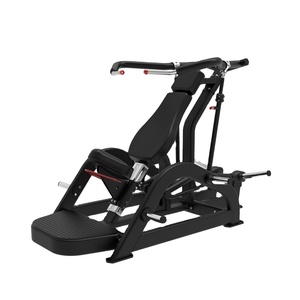
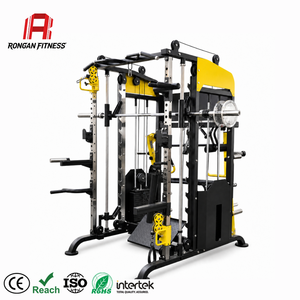
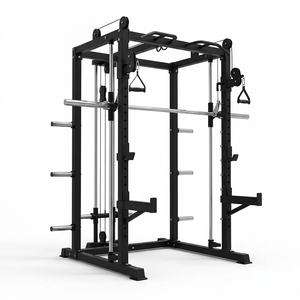
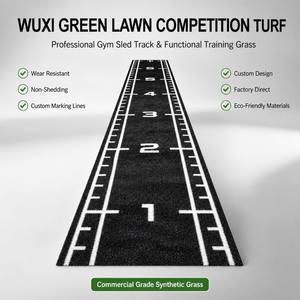
Why international fitness equipment brands, commercial distributors, and project contractors rely on our manufacturing campus.
Utilizing high-tensile Q235 and Q355 structural steel tube profiles (50x100mm and 75x75mm), our frame assemblies undergo full-penetration robotic MIG welding. This guarantees 100% seam consistency, eliminates heat-affected zone embrittlement, and delivers an unyielding foundation for decline abdominal compression forces.
All steel tubing undergoes an automated 8-stage pre-treatment phase, including shot-blasting to SA 2.5 cleanliness, chemical degreasing, and zinc-phosphate passivation. Finish coats feature electrostatic thermosetting powder application baked at 200°C, creating a 180–200 micron corrosion-resistant armor against sweat and humidity.
Our abdominal benches incorporate custom-molded high-rebound PU foam cores with an ultra-dense 120 kg/m³ rating. Wrapped in flame-retardant, anti-microbial commercial leatherette with double-stitched reinforced nylon seams, pads resist deformation under extreme point loads while providing lumbar stabilization.
Abdominal training equipment in commercial fitness environments faces unique biomechanical demands. Unlike passive flat benches, a commercial decline abdominal bench must withstand dynamic rotational torques, intense kinetic point loading during weighted sit-ups, and lateral shear forces from multi-planar core exercises. As an authoritative OEM/ODM Abdominal Bench Factory, our engineering team prioritizes kinetic pivot isolation, user spinal protection, and rapid adjustability.
Traditional budget benches utilize basic steel-on-steel sleeve bushings that wear rapidly, introducing structural play, frame wobble, and annoying mechanical squeaks within months of commercial deployment. Our heavy-duty adjustable decline abdominal benches feature dual-sealed industrial cartridge ball bearings fitted into precision-machined steel housing hubs. This ensures fluid, frictionless angle transitions while completely isolating lateral torque.
A frequent flaw in lower-tier abdominal benches is an unyielding flat backrest pad, which forces the user's lumbar spine into excessive hyperextension during decline sit-ups. Our engineering team utilizes CAD-modeled contoured backrests with built-in lumbar support curves. By keeping the pelvis stabilized and supporting the natural curvature of the spine, the abdominal muscles (rectus abdominis and obliques) achieve full eccentric extension and forceful concentric contraction without damaging lower back discs.
| Engineering Vector | Standard Commercial Specification | BODYTEC Industrial OEM Benchmark |
|---|---|---|
| Steel Frame Profile | 50 x 70 mm (1.8 - 2.0 mm wall) | 50 x 100 mm & 75 x 75 mm (2.5 - 3.0 mm wall Q355) |
| Pivotal Hardware | Nylon Bushing or Unsealed Sleeve | Dual Deep-Groove Sealed Ball Bearings |
| Foam Density Core | 60 - 80 kg/m³ Rebonded Foam | 120 kg/m³ High-Rebound Injection Molded Polyurethane |
| Angle Adjustment Mechanism | Manual Pin Slotted Plate | Gas-Spring Assisted One-Touch Quick-Pop Pin System |
| Static Weight Rating | 250 KG - 300 KG | 600 KG (Verified by FEA Stress Testing) |
The global commercial fitness equipment market is undergoing a structural transformation. B2B buyers—including commercial gym chains, hotel fitness operators, military physical training facilities, and regional equipment distributors—are shifting away from low-cost disposable hardware toward sustainable, modular, and technology-ready strength apparatus.
Regulatory mandates across the European Union (REACH / RoHS) and North America have placed stringent restrictions on volatile organic compounds (VOCs) and heavy metal residues in gym equipment manufacturing. Forward-thinking factories are adopting zero-VOC thermosetting powder coatings and sourcing recycled green steel billets. Our factory production lines incorporate closed-loop chemical reclamation systems, giving our OEM partners a distinct compliance edge in Western export markets.
Modern commercial facility floor space carries a high premium cost per square meter. Consequently, procurement directors demand multi-functional strength units. Future abdominal bench designs feature integrated attachment ports for leg developers, resistance band pegs, hyper-extension conversions, and vertical storage footprints. By offering modular OEM base frames, we allow distributors to expand their product offerings without multiplying SKU tooling costs.
Smart fitness facilities are incorporating IoT sensors directly into selectorized and free-weight equipment. OEM abdominal benches are evolving to integrate discrete movement-tracking telemetry ports. These sensors log repetition counts, angular range of motion, velocity, and time-under-tension, transferring data seamlessly to member apps while offering facility managers predictive maintenance alerts regarding pad wear and pivot lubrication cycles.
From conceptual 3D solid modeling to containerized ocean freight, we turn your brand specifications into production reality.
Clients submit technical parameters or sample ideas. Our engineering division creates complete SolidWorks 3D models and performs Finite Element Analysis (FEA) to simulate load stress, frame deflection, and fatigue resistance before physical prototypes are built.
We fabricate precision laser-cut jigs and welding fixtures to ensure exact dimensional repeatable accuracy across mass production runs. Golden sample prototypes are built, load-tested, and shipped to clients for structural and aesthetic sign-off.
Brand customization includes high-precision laser-cut stainless steel logo badges, custom frame powder coat RAL color matching, bespoke upholstery thread stitching, printed instruction placards, and drop-tested honeycomb export cartons.
Essential answers for commercial fitness equipment buyers, importers, and project procurement officers.
