Precision-engineered motorized running machines manufactured for high-traffic fitness clubs, luxury hotel wellness centers, and international institutional tenders.
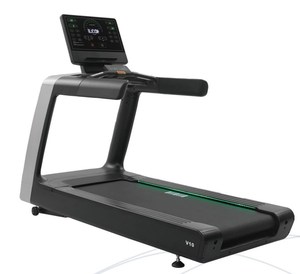
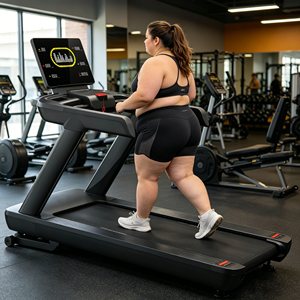
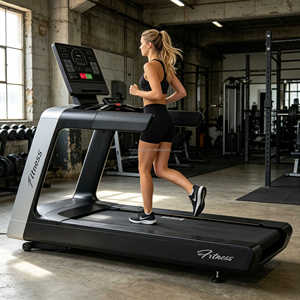
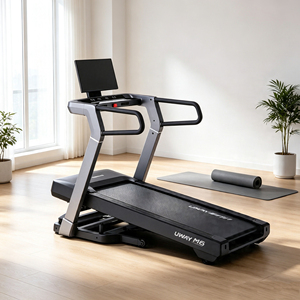
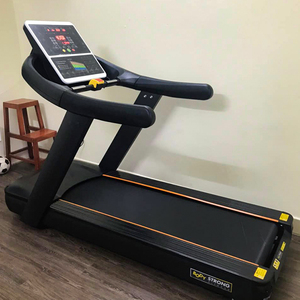
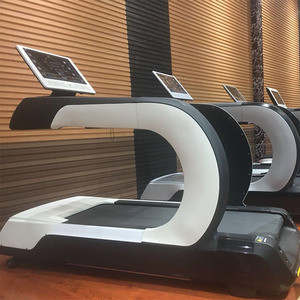
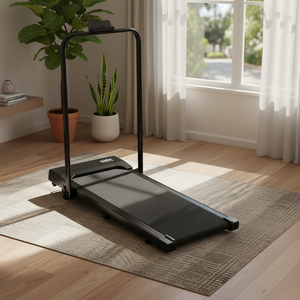
Unlike regional trading brokers, our integrated manufacturing plant in Jaipur combines heavy metallurgical processing, robotic MIG welding, and automated powder-coating under one roof.
Main structural pillars are engineered from 2.0 mm to 3.0 mm wall-thickness mild-steel tubing in 50 x 100 mm profiles. Reinforced gusset plates prevent frame torsion under 180kg dynamic runner impacts during peak operating hours.
Frames undergo shot-blasting, alkaline degreasing, and zinc-phosphate conversion before electrostatic powder coating at 180–200 microns. Cured at 200°C for exceptional resistance to perspiration corrosion and humidity.
Full-scale private label programs including custom powder-coat Pantone matching, laser-cut stainless steel brand badges, custom upholstery double-stitching, and localized multi-lingual user software.
An in-depth procurement breakdown for commercial facility developers, gym chain franchisees, and fitness equipment importers evaluating long-term capital expenditure.
In the commercial fitness industry, treadmill failures account for nearly 42% of total cardio equipment maintenance calls. The primary root cause lies in a fundamental procurement oversight: confusing peak motor horsepower (PHP) with continuous-duty rating (CHP). B2B procurement managers must mandate industrial Class H insulated AC induction motors driven by Variable Frequency Drives (VFD) from recognized manufacturers such as Mitsubishi or Fuji Electric.
A true commercial treadmill must maintain continuous torque across prolonged operational cycles (12–18 hours daily) without exceeding thermal threshold limits. Unlike residential DC motors that degrade under sustained frictional loads, AC induction motors utilize frequency regulation to modulate belt speed, reducing current draw spikes and preventing thermal breakdown of rotor windings. When evaluating supplier spec sheets, verify that motor ratings conform to IEC 60034-1 continuous duty standards rather than short-burst peak figures.
Runner retention in commercial health clubs is heavily influenced by deck ergonomics. Modern commercial treadmills feature phenolic resin-impregnated reversible decks (25 mm to 32 mm thickness) paired with multi-stage elastomer shock cushions. Elastomer durometer ratings are calibrated strategically along the running surface:
• Impact Zone (Front 30%): Calibrated at 45–50 Shore A durometer to deliver maximum shock dissipation during heel strike, reducing kinetic impact forces on the user's patellar tendons and lumbar spine by up to 32%.
• Transition Zone (Mid 40%): Engineered at 55–60 Shore A durometer to support smooth mid-foot roll-through and energetic biomechanical balance.
• Propulsion Zone (Rear 30%): Firmly tuned at 65–70 Shore A durometer to provide a rigid platform for powerful toe-off acceleration without energy loss.
The commercial fitness sector is transitioning rapidly from standalone mechanical treadmills to hyper-connected cardio nodes integrated with cloud-based facility management software. Supplier selection in 2025 and 2026 relies heavily on digital telemetry capabilities:
• Real-Time Vibration & Friction Telemetry: Micro-electro-mechanical (MEMS) sensors integrated beneath the deck monitor friction coefficient build-up between the running belt and phenolic board. Facility managers receive automated alerts when deck lubrication is required, avoiding premature motor driver burnouts.
• Open Telemetry & API Integration: Leading commercial treadmills support standard communication protocols (ANT+, Bluetooth FTMS, Ethernet RJ45) allowing seamless sync with gym management systems like Mindbody, Myzone, and Apple GymKit.
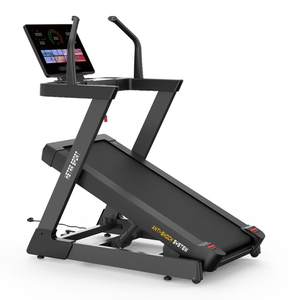
• High-Incline Metabolic Training Units: Driven by the rising popularity of hybrid athletic conditioning, treadmills offering extreme incline gradients (-6% decline to +48% climb) are seeing a surge in demand, replacing conventional stair climbers in high-intensity interval training (HIIT) zones.
When analyzing quotes from top commercial treadmill suppliers, initial FOB price represents only 35% of the machine's 5-year Total Cost of Ownership (TCO). Procurement directors are prioritizing modular component architecture that allows rapid on-site servicing without complete frame dismantling:
• Reversible Decks: Double-sided phenolic coatings effectively double deck service lifespan, requiring only a 15-minute rotation process after 25,000 running kilometers.
• Pre-Lubricated Wax Impregnated Belts: Eliminates manual liquid silicone application, preventing belt slippage, uneven wear, and electrical short circuits caused by fluid ingress into bottom MCU boards.
• Universal Motor Controller Harnesses: Standardization of wire harnesses and drive boards across product lines significantly reduces regional distributor spare-part inventory holding costs.
Key market drivers shaping global manufacturing standardizations for importers, commercial fitness developers, and procurement officers.
Next-generation commercial treadmills utilize high-efficiency AC frequency inverters with regenerative braking circuits. Energy captured during user deceleration is recycled, cutting club electrical consumption by up to 18% per cardio bank.
Global gym operators are diversifying vendor sourcing beyond single-country dependence. India's emerging fitness equipment manufacturing corridors—such as Jaipur—offer robust steel fabrication infrastructure and stable export logistics.
High-resolution 21.5-inch touchscreens with cloud-streamed virtual running trails, integrated wireless charging docks, and digital cardio telemetry have shifted from luxury add-ons to essential baseline procurement specs.
Addressing critical technical, logistical, and OEM manufacturing questions raised by B2B buyers.
Connect directly with our engineering and export team in Jaipur for container load plans, OEM private label terms, and factory-direct pricing.
