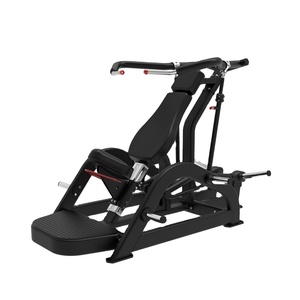
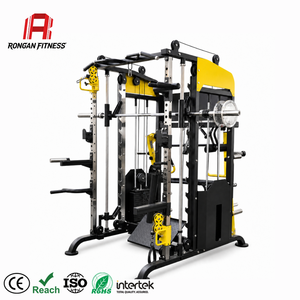
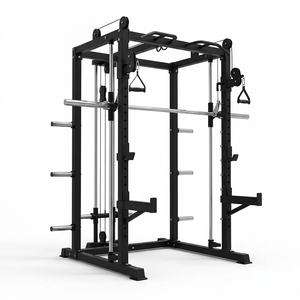
Engineered for extreme wear resistance, biomechanical impact absorption, and noise isolation in commercial fitness spaces.
In modern commercial fitness facility engineering, the interdependency between specialized high-density rubber flooring, functional sled turf, and structural strength equipment is critical. As commercial gyms transition into high-traffic hybrid training hubs—combining Olympic weightlifting, functional HYROX sled tracks, and high-load plate-loaded strength stations—the subfloor substrate faces unprecedented kinetic energy transfers.
Specifying commercial gym flooring is no longer a cosmetic decision; it is a structural engineering requirement. Standard recycled rubber mats or low-density EVA foams fail rapidly under continuous point loads and cyclic high-impact drops. When heavy barbells or bumper plates strike an unengineered surface, the residual force vectors travel directly into the concrete slab, causing subfloor micro-fractures, acoustic noise amplification across multi-story commercial real estate, and structural frame fatigue on strength machines.
Our factory utilizes high-pressure vulcanization processes to bind refined Styrene-Butadiene Rubber (SBR) and Ethylene Propylene Diene Monomer (EPDM) granules with MDI polyurethane binders. Unlike low-cost cold-molded alternatives that degrade under UV exposure and heavy shear stress, high-density vulcanized rubber flooring exhibits a Shore A hardness rating of 65° to 75°. This precise balance provides firm lateral stability for lifters executing heavy squats while offering dynamic elastic recovery during impact shock absorption.
A major challenge for commercial gym operators, hotel fitness centers, and multi-tenant wellness facilities is acoustic noise transmission. Dropped weights generate both airborne sound and low-frequency structure-borne impact noise. Advanced multi-layer gym flooring incorporates engineered micro-porous acoustic underlayments and waffle-bottom tile geometry. This configuration dissipates energy laterally, lowering Impact Insulation Class (IIC) ratings significantly and meeting stringent commercial property management noise ordinances (ASTM E2179 and ISO 10140 standards).
Key strategic shifts reshaping how international importers, distributors, and commercial gym developers source heavy-duty flooring and functional training equipment.
With real estate costs pushing fitness facilities into multi-story retail plazas and residential towers, procurement mandates now strictly require certified acoustic rubber flooring solutions. Buyers are prioritizing flooring systems with verified laboratory STC and IIC sound isolation ratings over basic aesthetic qualities.
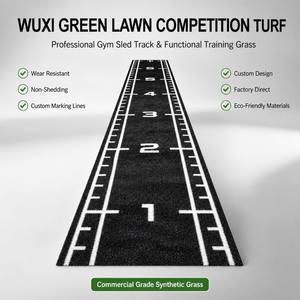
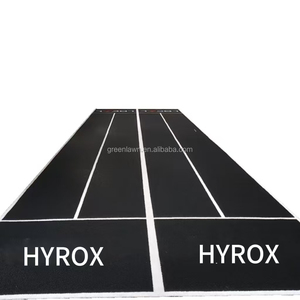
Functional fitness competitions like HYROX have triggered massive demand for high-density, non-directional artificial sled turf. Procurement profiles have shifted from standard decorative astro-turf to heavy-duty 15mm-20mm polyethylene turf fused with shock-absorbing polyurethane backing engineered for high-friction weighted sled pushes.
Global distributors are eliminating high-VOC rubber products that off-gas toxic chemical odors. Future-proof procurement focuses on REACH-compliant, non-toxic, sulfur-cured virgin EPDM top layers and solvent-free polyurethane binders, ensuring clean indoor air quality (IAQ) inside climate-controlled fitness clubs.
The manufacturing process of heavy-duty gym rubber rolls, interlock tiles, and athletic turf tracks has undergone revolutionary advancements over the past three years. Factories utilizing legacy cold-press methods are being displaced by precision thermal-vulcanization and laser-calibrated production lines.
Rather than using uniform rubber density throughout the tile thickness, modern commercial flooring leverages dual-layer co-extrusion technology:
In sled turf manufacturing, traditional polypropylene fibers melt or fray quickly under the friction heat generated by metal sled skis. Modern gym turf utilizes 100% UV-stabilized monofilament Polyethylene (PE) fibers with a high Dtex rating (8,800–10,000 Dtex). Combined with a high-stitch density (over 25,000 stitches/m²), these turfs allow weighted sleds to glide smoothly without bunching, shedding, or thermal fiber degradation.
As a top-tier manufacturer and direct exporter, our integrated campus combines heavy machinery fabrication, polymer flooring molding, and global supply chain logistics.
Main strength equipment frames are fabricated from 2mm to 3mm wall-thickness mild-steel tube in heavy-duty 50 x 100 mm and 75 x 75 mm profiles. Structural joints undergo robot-assisted MIG welding, shot-blasting pre-treatment, and electrostatic powder coating cured at 180–200°C for superior corrosion and humidity resistance.
We provide full-container load (FCL) consolidation from factory directly to regional ports worldwide (Middle East, Europe, Americas, Asia-Pacific). Products are knock-down packed in export-grade fumigated wooden crates with reinforced edge protectors and moisture-barrier film wrapping.
We manufacture custom private-label equipment and specialized rubber flooring for international brands. Capabilities include custom powder-coat color matching, laser-cut brand badges, custom upholstery stitching, custom turf line markings, logo vulcanization, and retail barcode packaging.


Direct answers to crucial technical, shipping, and customization questions asked by commercial buyers and importers.